Read at Mr Yancy's Class Room inside the museum · the same label the museum panel shows, from content/inception/museum-labels/mr-yancy-wall-3.html

Mr Yancy's Class Room · Wall 03

Three Games

This moving pixel mural visits three kinds of play: a beginner Snake, a faster three-snake arena, and a complete recorded Gomoku match. It ends by asking what game you would choose next.

The complete visual sequence
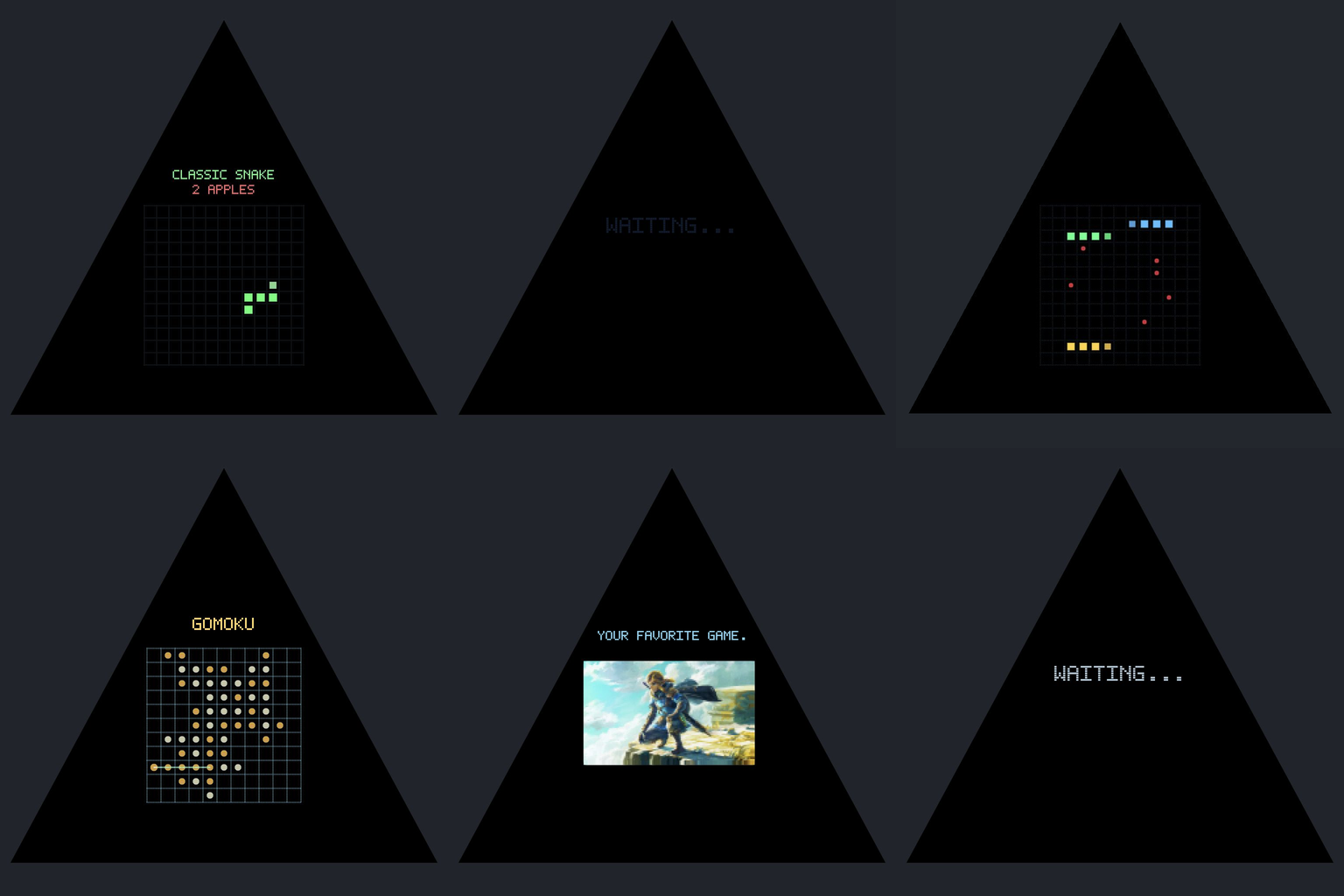
Six moments from the artwork: classic Snake, a waiting card, a three-snake arena, Gomoku, a favorite-game image made from pixels, and another waiting card.
Reading left to right: classic Snake introduces the rules; a flashing pause resets attention; the arena adds speed and multiple actors; Gomoku records a human strategy; the final image opens the question to the visitor. The pauses are part of the rhythm, not missing scenes.

How the arena becomes motion

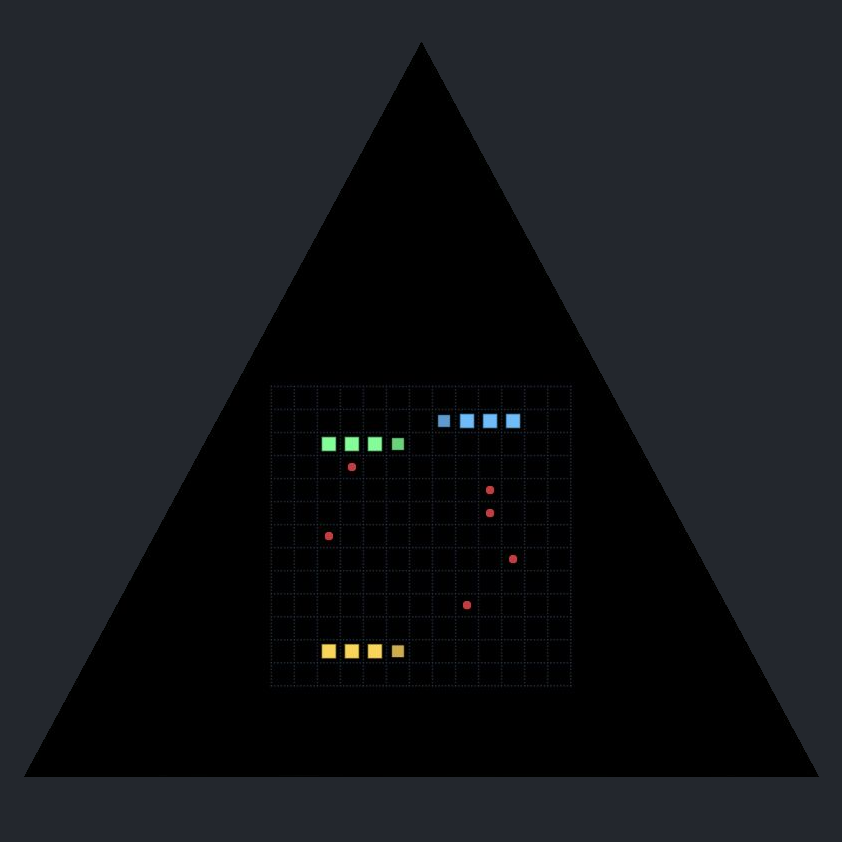
A square game grid containing green, blue, and yellow snakes and red food pixels.
Every square on the board means one thing: empty, food, or one piece of a snake. Each turn, the head moves forward exactly one square, and every body piece steps into the spot the piece in front just left. Only a few numbers change — but it looks like smooth, continuous slithering.

Rules turn pixels into a game

The first Snake keeps the idea easy to see with one snake and two apples. The arena then combines three snakes, food, timing, and collision rules. The pixels have not become more complicated; the relationships between them have.

Gomoku (five-in-a-row) adds a new kind of information: choices made by real players. All 55 legal moves of one real game — every move its rules allowed — replay in the exact order they were played, ending with the winning five-in-a-row lit up. So this is not a decoration: it is a real game, saved.

A game appears when images, rules, time, and player choices begin to work together.