Mr Yancy's Class Room · Wall 02
From Bits to Meaning
A bit is the smallest possible answer: one of two choices, written 0 or 1 — like a light switch that is either off or on. This artwork follows those tiny choices as they team up into numbers, letters, pictures, sound, and movement.
Watch the symbols gather
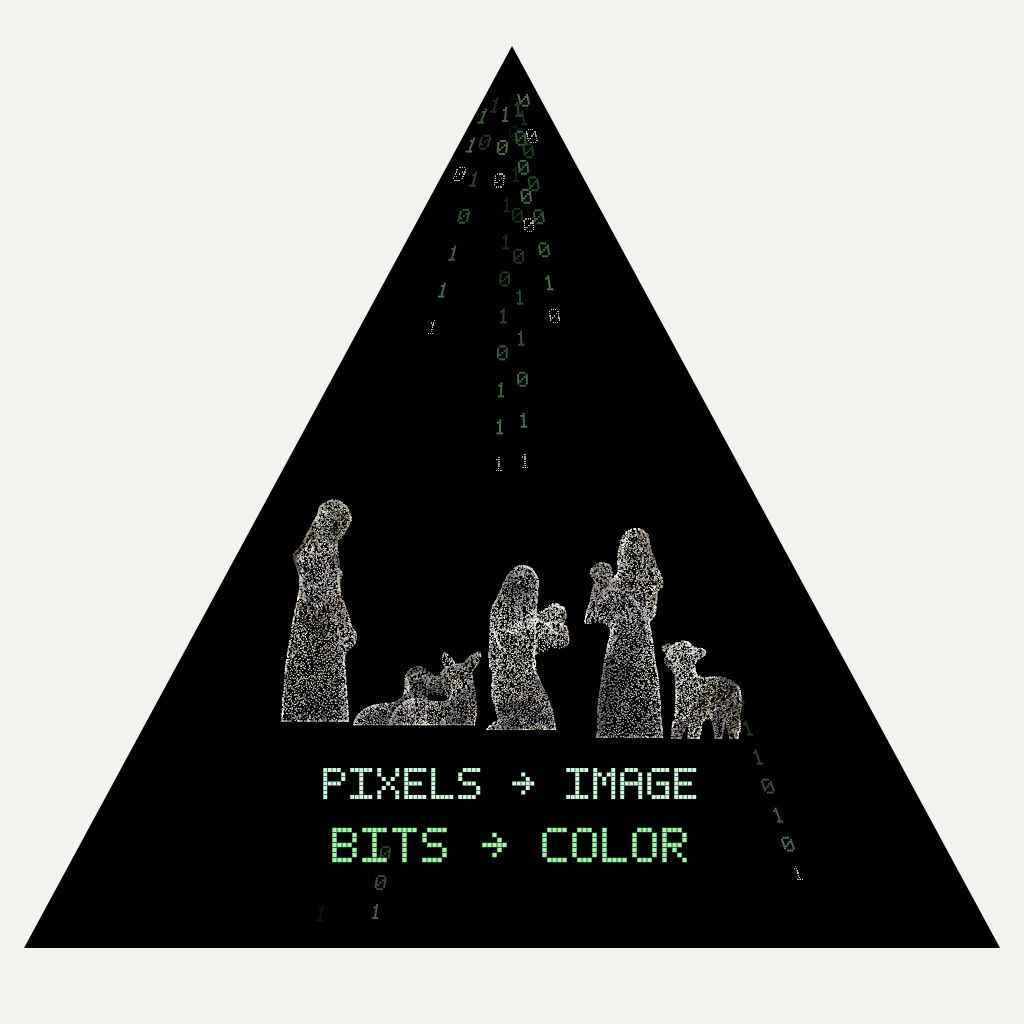
One short decoding example
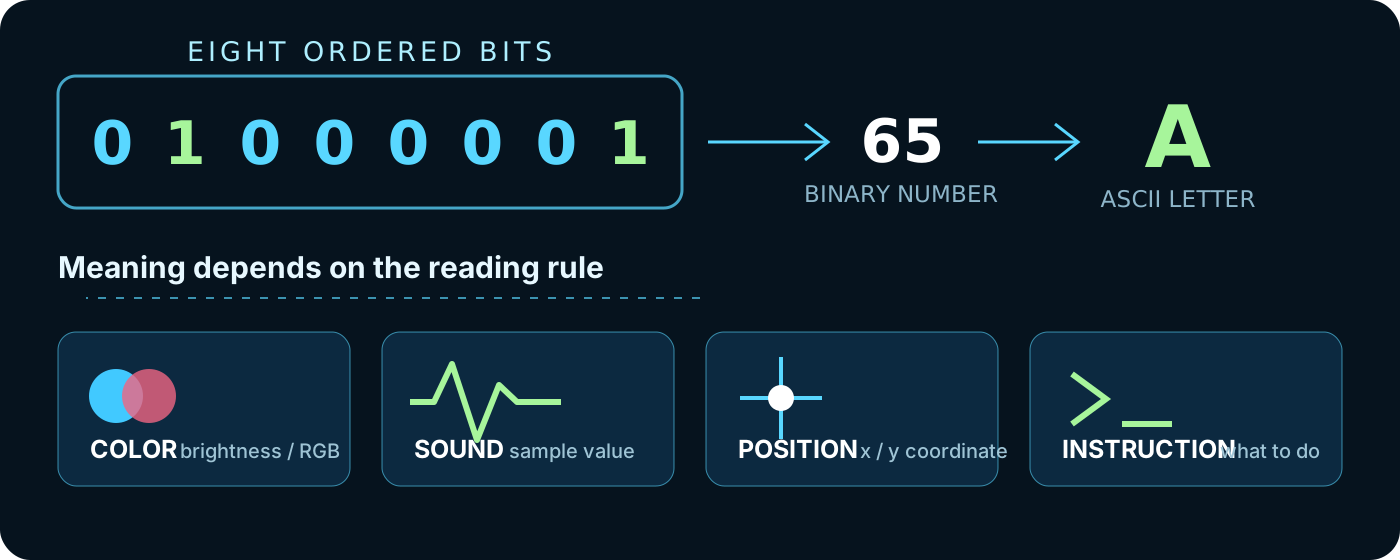
The rule completes the message
Numbers do not tell you what they are for. The same group of bits could be how bright a dot is, one tiny slice of a sound, a spot on a map, a moment in time, or a command for the computer. The pattern never changes — only its job does.
A scientist named Claude Shannon showed that you can study information itself, no matter what message happens to carry it — the way you can study boxes without caring what is inside. This artwork starts from his big idea: meaning comes from how things are arranged, plus a rule everyone agrees on for reading them.
Two symbols can support many different worlds because we can create different rules for reading them.