Journey of Art
Lucas and Jesus — From Underdrawing to Finished Painting
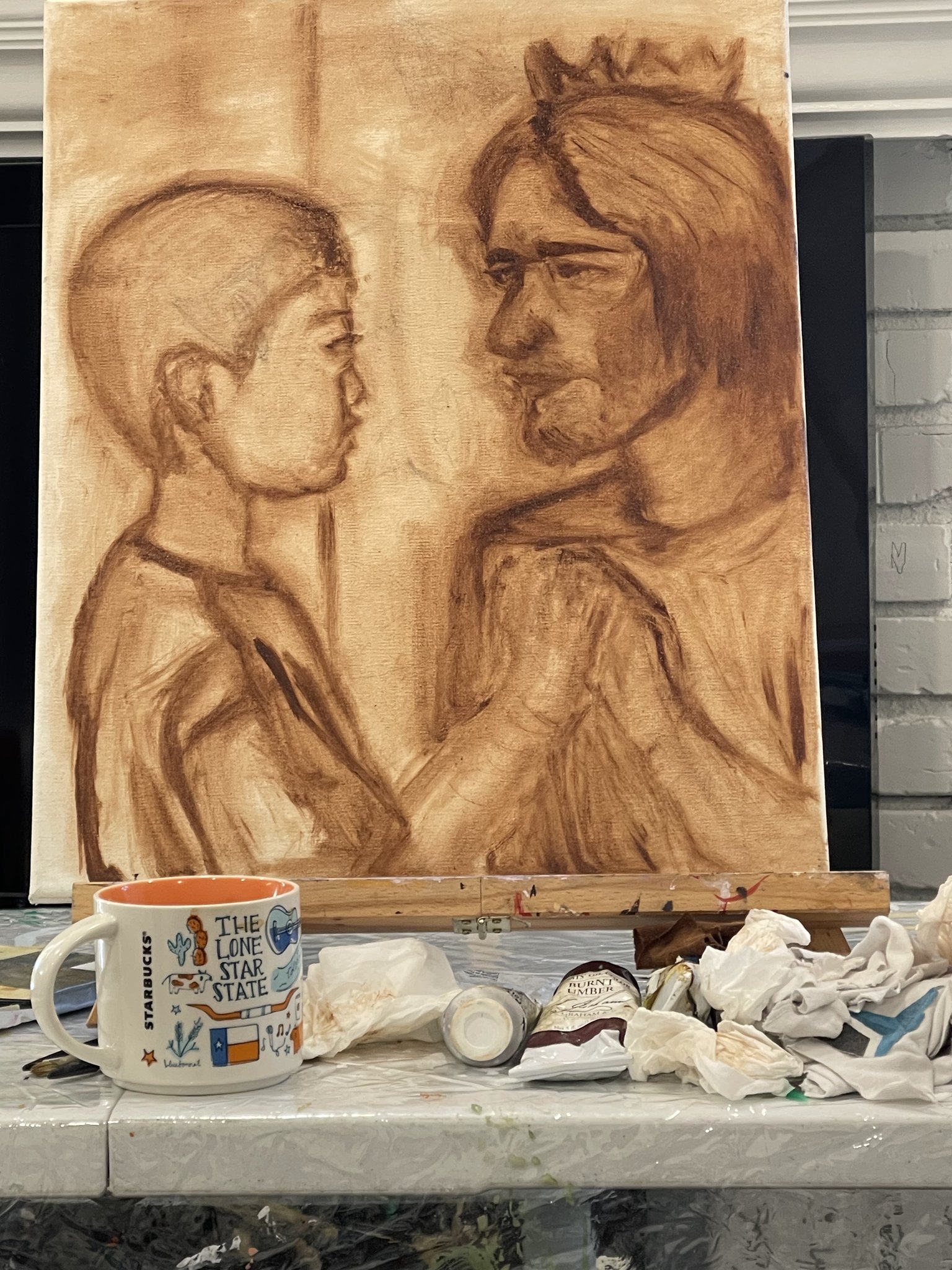
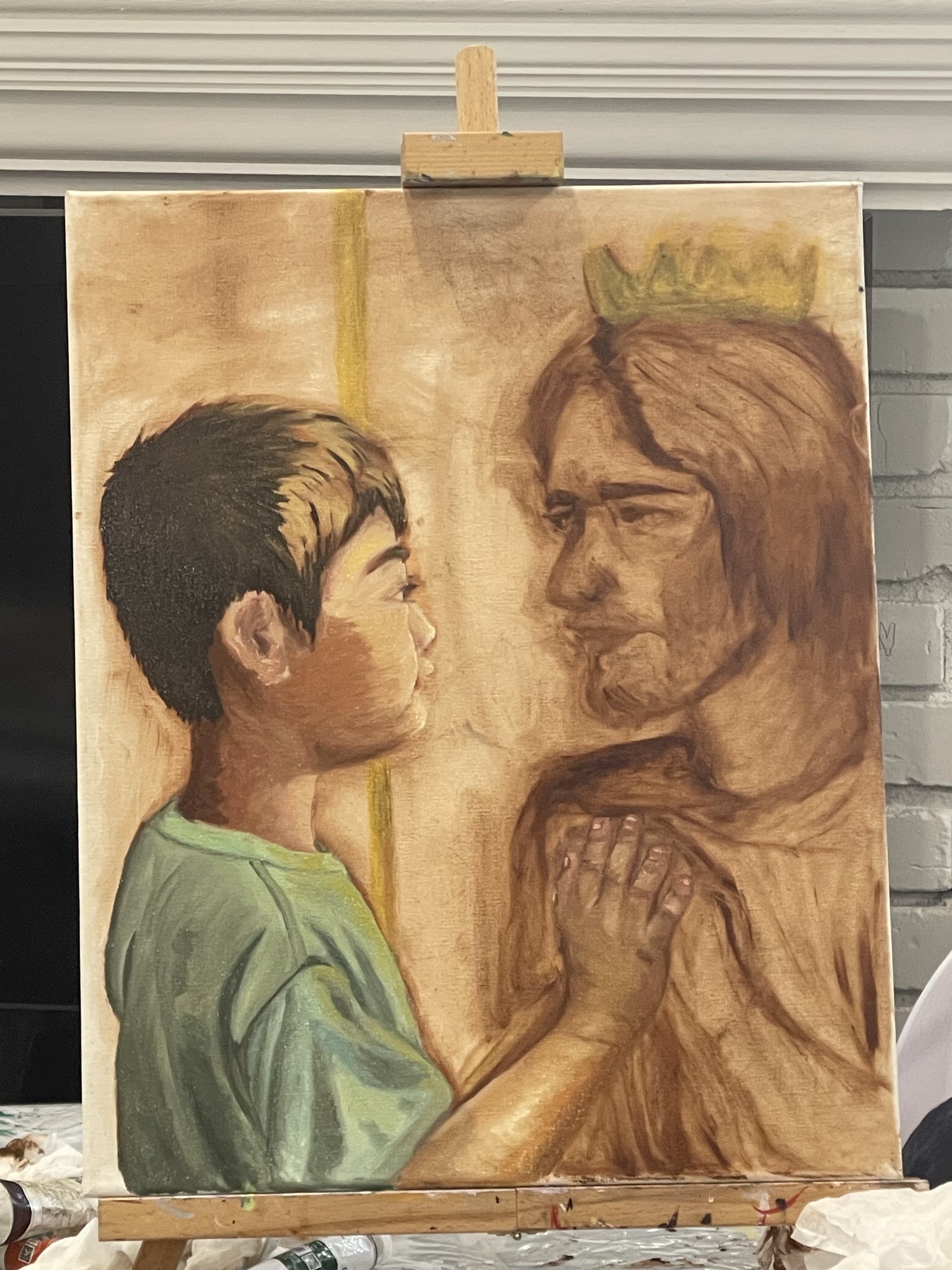
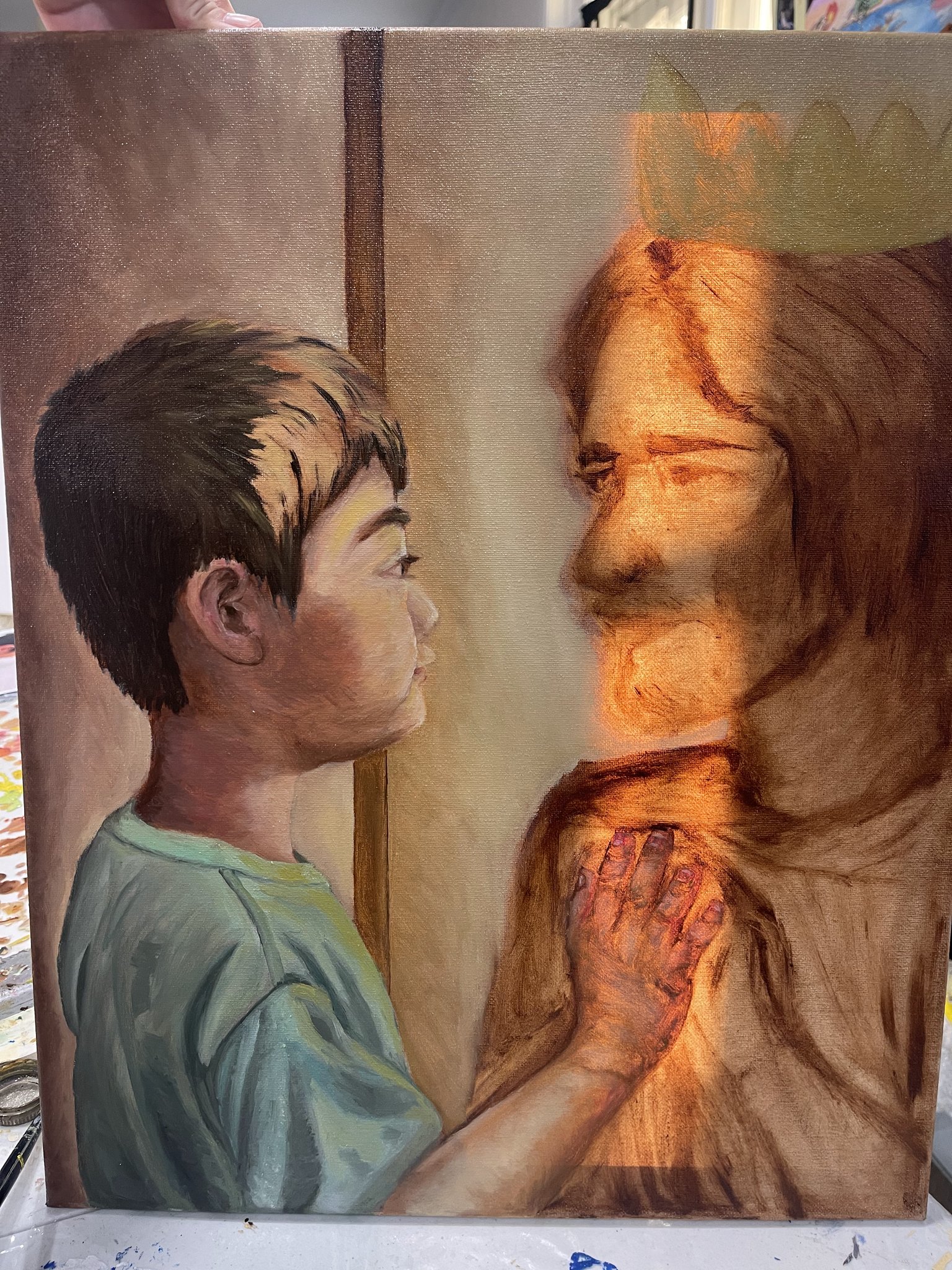
The framed painting on this wall was not made in one go — it grew in stages. Three photos catch it partway: first just a drawing, then with its first coat of colour, then almost done.
What the three photographs show
Look at the three photos left to right: it is the same picture at three moments. What changes? The drawing gets corrected, colour gets layered on top, light and dark get pulled further apart, and more and more small details appear.
 |
 |
 |
Stages 1, 2 and 3, in chronological order. Select one to see it large. The exhibit’s numbered actions open the same three pictures.
Stage 1 — Brown underdrawing
The whole picture is first drawn in brown — painters call this the underdrawing — with no real colour yet. The big decisions happen here: where each person stands, how large they are, and how the space is divided up.
Stage 2 — First developed colour pass
Colour goes over the drawing for the first time. The big areas are filled in, and in places you can still see the drawing peeking through. Edges are still soft; details are still missing.
Stage 3 — Near-finished colour pass
The colour is pushed further: bright parts get brighter, dark parts darker, so the picture stands out. The small details are painted in, bringing it close to done.